Static web design is dead. Learn how AI-driven UI/UX is creating adaptive, highly personalized interfaces that boost conversion rates and user engagement.
For the last twenty years, building a website or app meant designing a “one size fits all” experience. We built personas, created a static user journey, and hoped the layout appealed to the widest possible demographic.
In 2026, forcing every user down the exact same visual pathway feels archaic. The future of user experience is AI-driven, adaptive UI/UX.
What is Adaptive UI?
Instead of a static HTML template that looks identical to everyone, an AI-driven interface adapts its layout, messaging, and functionality in real-time based on the individual user's behavior, preferences, and context.
Think of it as a digital concierge. If a user consistently clicks on video content rather than reading text, the UI learns this preference and surfaces video tutorials first. If an elderly user with vision impairments visits the site, the interface can automatically increase contrast and typography scale.
The Pillars of AI-Driven Design
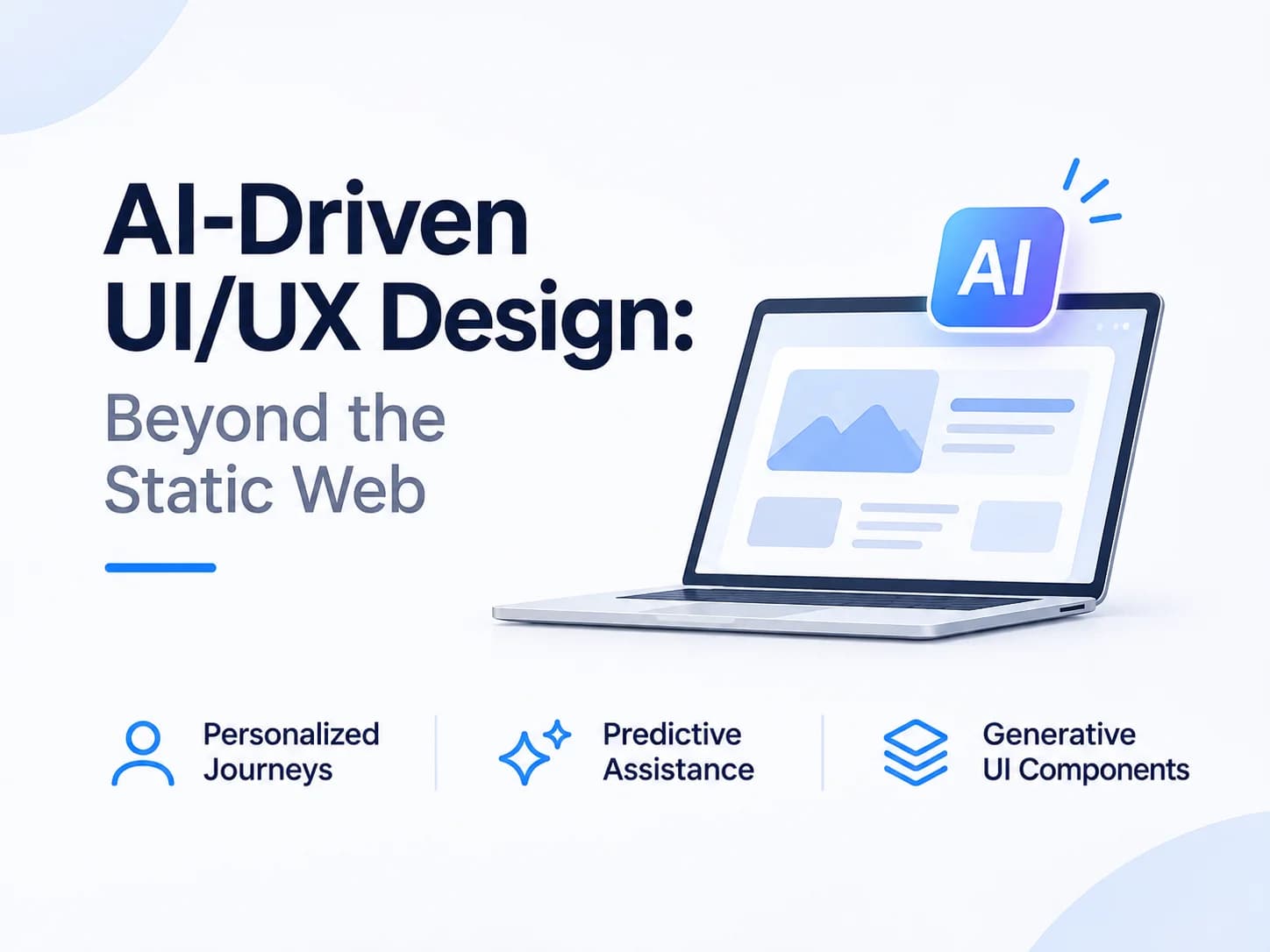
1. Hyper-Personalized User Journeys
Traditional A/B testing pits two static designs against each other to find a universal winner. AI-driven design runs micro-tests constantly. It analyzes cursor movements, scroll depth, and click patterns to dynamically rearrange navigation menus or feature product categories that are statistically most likely to convert that specific user.
2. Predictive Assistance
Great UX removes friction. AI models integrated into the UI can predict what a user is trying to accomplish before they finish typing. We are moving from reactive interfaces (waiting for the user to click a button) to proactive interfaces (suggesting the next logical step based on historical data).
3. Generative UI Components
We are seeing the rise of generative UI, where the interface itself is constructed on the fly. Rather than a designer manually creating 50 different dashboard views, an AI generates the optimal layout of charts and data points based on what the user asked to see.
Retaining Brand Identity
The biggest fear with AI-driven design is losing brand control. If the interface is constantly changing, how do you maintain a cohesive brand identity?
This is where expert design engineering comes in. At Nutz, we don't let AI run wild. We establish a strict Design System—a coded library of brand colors, typography, spacing rules, and component states. The AI is then given strict parameters: it can reorganize blocks, swap out hero images, or change copy, but it must do so using only the approved brand tokens.
This ensures the experience remains distinctly yours, even as it adapts uniquely to every visitor.
The ROI of Adaptive Design
Adaptive UI is not a gimmick; it is a conversion engine. By showing users exactly what they want to see, in the format they prefer, you drastically reduce cognitive load and bounce rates.
As we look toward the future of web design at our Erode studio, we are no longer just asking, “How does this look?” We are asking, “How does this adapt?”
Related work
View Clotricks web app case studyAbout the Author

Nutz
Design & Development Team
We share insights on design, development and building digital products from our studio in Erode, Tamil Nadu.
Work with usRelated SaaS product
Built by Nutz in Erode
Explore SaaS products we design and ship.