AI Needs More Than GPUs: The Hidden Infrastructure Boom

Nutz
2026-10-08
The AI boom isn't just about software and Nvidia GPUs. Discover the massive physical infrastructure—from HBM packaging to power grids—required to scale Artificial Intelligence.
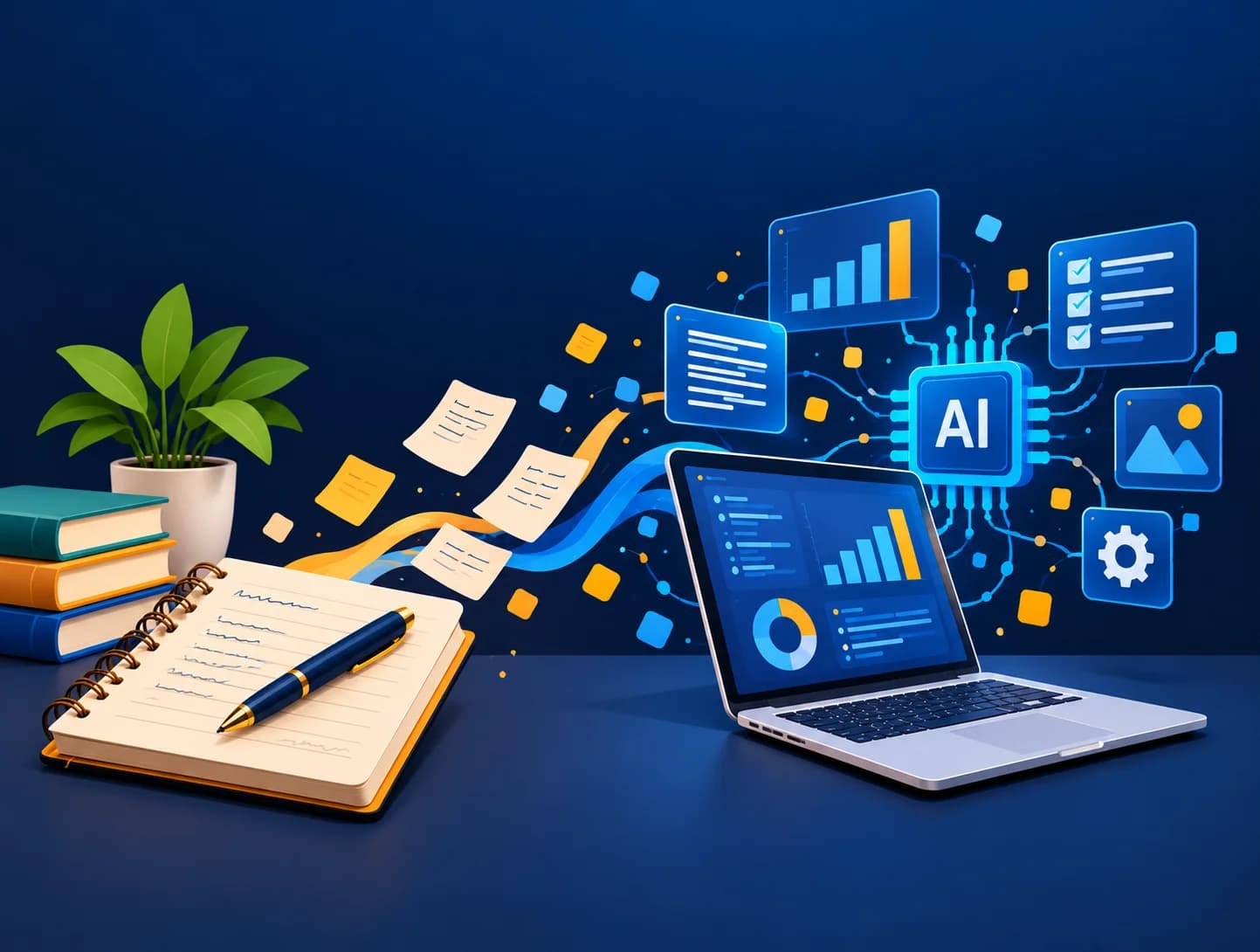
When we talk about the Artificial Intelligence boom, the conversation almost always starts and ends with software (like ChatGPT) and silicon chips (specifically, Nvidia GPUs).
But an AI model is only a few gigabytes of data, and a GPU is just a piece of metal and silicon. For AI to actually function at a global scale, it requires one of the most complex, expensive, and physically massive industrial supply chains in human history.
AI is no longer just a software problem; it is an industrial infrastructure problem. Here is a look at the hidden, physical stack that makes the AI boom possible, and where the real bottlenecks lie.
The Complete AI Infrastructure Stack
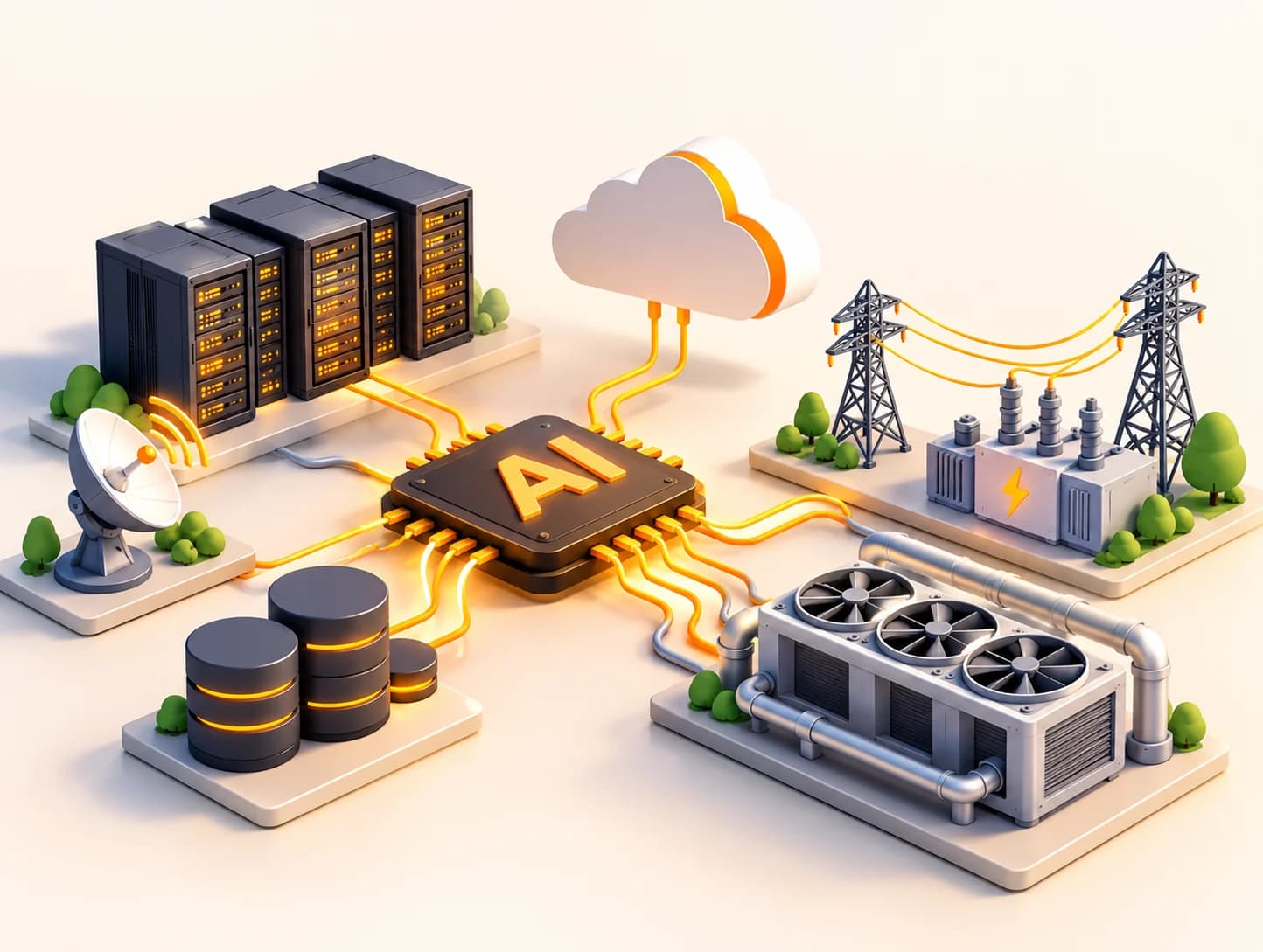
To train and run a massive AI model, you need far more than a processor. You need a synchronized, global supply chain:
1. The Silicon and Memory
- Accelerators (GPUs/TPUs): The math engines doing the actual computation.
- High-Bandwidth Memory (HBM): AI requires feeding massive amounts of data into the GPU instantly. HBM is incredibly difficult to manufacture and is currently a major global bottleneck.
- Advanced Packaging: The microscopic, highly complex process of stitching the GPU and the HBM together on a single chip.
2. The Server and Network
- Servers: Specialized motherboards designed to handle the massive heat and power draw of 8 interconnected GPUs.
- Networking & Fiber: When training an AI model, 10,000 GPUs must talk to each other simultaneously. This requires highly specialized, incredibly fast networking cables and switches (like InfiniBand). A tiny delay in a single cable slows down the entire multi-million-dollar cluster.
3. The Physical Building
- Data Centers: Massive, fortified warehouses built specifically for AI workloads.
- Cooling: AI chips run incredibly hot. Traditional air conditioning is no longer sufficient; data centers are moving to direct-to-chip liquid cooling.
- Storage: Massive, high-speed NVMe data storage to hold the trillions of words and images used for AI training.
4. The Grid and Capital
- Electricity: The lifeblood of AI. A single AI data center can consume as much power as a small city.
- Grid Transformers: You cannot plug a 500-megawatt data center into a standard power grid. You need massive electrical transformers, which currently face multi-year supply chain delays.
- Construction & Land: Finding land that has access to massive amounts of water (for cooling) and massive amounts of electricity is becoming difficult globally.
The AI Supply Chain Nobody Talks About
While software engineers iterate on AI models daily, pouring concrete, laying fiber-optic cables, and building electrical substations takes years.
The International Energy Agency (IEA) has noted severe bottlenecks in grid connections and electricity availability. The physical reality of AI is that it requires copper, steel, water, and specialized labor. If there is a shortage of electrical transformers, it does not matter how brilliant the new AI software is—the data center cannot turn on.
What Happens If Model Efficiency Outpaces Infrastructure Growth?
We are currently in a race between two competing forces: the slow, expensive build-out of physical infrastructure, and the rapid, cost-cutting improvements in software efficiency.
Because building data centers is so difficult, the software industry is highly incentivized to make AI models smaller and more efficient. We are seeing the rise of Small Language Models (SLMs) and highly optimized decision models that require a fraction of the compute power of a frontier model.
If software efficiency improves faster than data center construction, the intense pressure on the power grid may alleviate. But if AI demand continues to scale exponentially, the infrastructure bottleneck will persist for a decade.
What Does the AI Infrastructure Race Mean for India?
For India, the AI infrastructure race presents massive opportunities and stark constraints.
India has an incredibly strong software engineering ecosystem and a booming tech startup scene. However, localizing AI compute requires heavy industrial investment.
- Data Centers: India is rapidly expanding its data center capacity, driven by data localization laws and massive cloud demand.
- Energy Constraint: Powering massive AI clusters requires stable, base-load electricity, pushing a greater need for renewable energy investments.
- The Edge Opportunity: Because India relies heavily on mobile internet, there is a massive strategic opportunity to bypass massive cloud data centers and focus on Edge AI—running highly efficient, localized AI models directly on user smartphones.
Nutz is at the forefront of building scalable, efficient software architectures for the modern era. We help businesses deploy robust digital infrastructure. Explore our engineering capabilities.
Related work
View Clotricks web app case studyAbout the Author
Nutz
Design & Development Team
We share insights on design, development and building digital products from our studio in Erode, Tamil Nadu.
Work with usRelated SaaS product
Built by Nutz in Erode
Explore SaaS products we design and ship.