Amazon vs Your Own E-Commerce Website: Where Should You Sell?

Nutz
2026-10-06
Selling products online in India? Discover the massive differences in profit margins, brand control, and customer data between Amazon and building an owned D2C website.
When an Indian manufacturer or brand decides to take their physical products online, they are faced with a monumental choice: Do we become an Amazon Seller, or do we build our own independent e-commerce website?
This is not just a technical choice; it is a decision that dictates your profit margins, your brand identity, and the long-term valuation of your company.
Selling on Amazon gives you instant access to millions of buyers, but you surrender control and profits. Building your own website gives you 100% control, but you must fight for every visitor. Here is a practical analysis of the differences, and how growing brands navigate this choice.
Selling on Amazon: The Rented Supermarket
When you sell on Amazon, you do not own a store. You are renting shelf space in Jeff Bezos’s supermarket.
The Massive Advantages:
- Instant Traffic & Trust: You do not have to convince an Indian consumer that Amazon is safe. They already have the app installed and their credit card saved.
- Logistics Solved: If you use Fulfillment by Amazon (FBA), Amazon handles warehousing, packing, fast shipping, and even customer returns. You just manufacture and ship bulk to their warehouse.
- Search Volume: Millions of people go directly to Amazon and type "leather wallet" without ever searching Google.
The Fatal Flaws (Why Brands Leave):
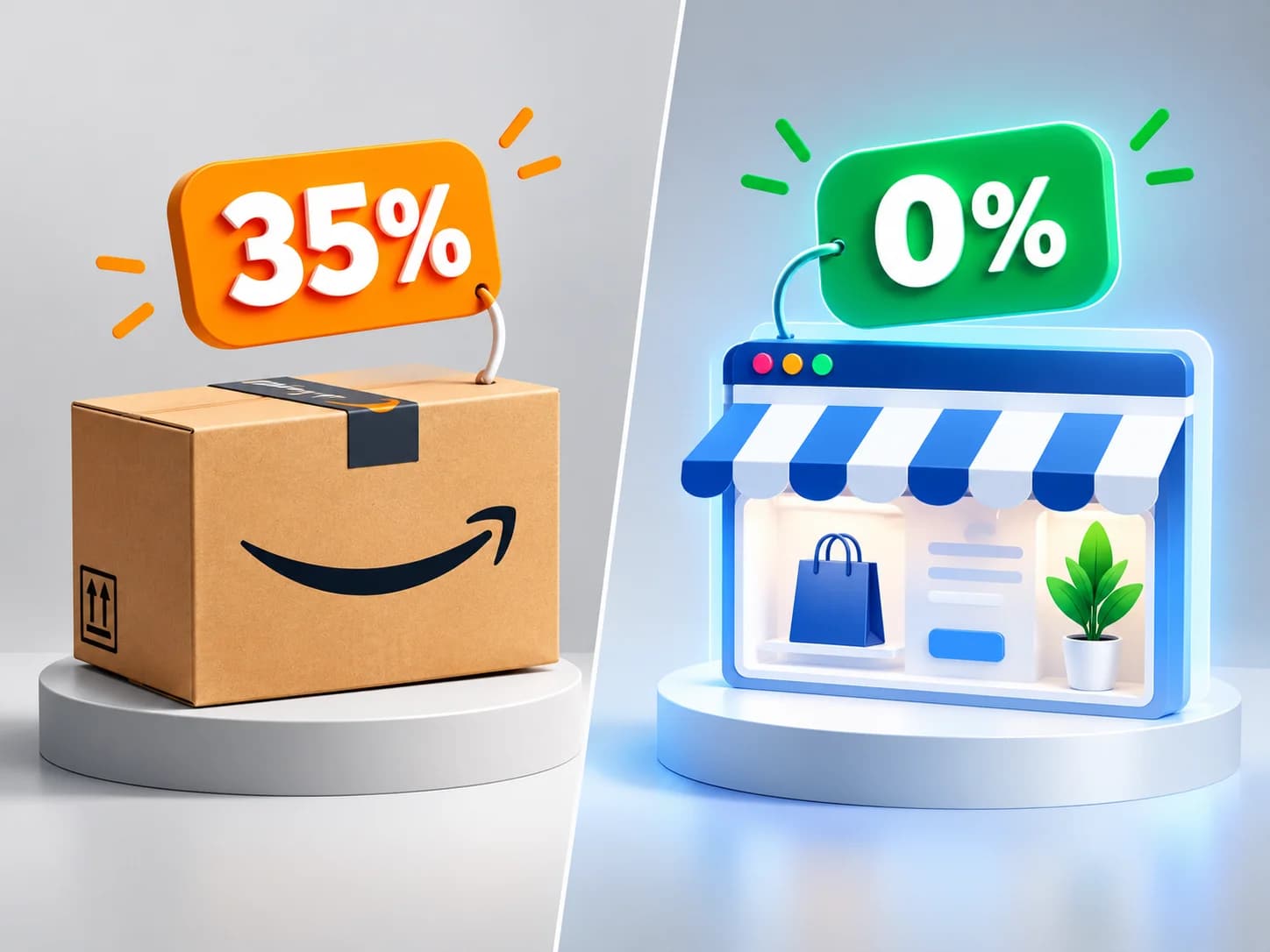
- Crushing Commissions: By the time you pay referral fees, FBA closing fees, shipping fees, and mandatory advertising (PPC) to rank on Page 1, Amazon often takes 35% to 50% of your revenue.
- Zero Customer Ownership: Amazon strictly forbids you from accessing the customer's email address or marketing to them. You cannot build a loyal customer base because they are Amazon's customers, not yours.
- The Competitor Next Door: On your Amazon product page, Amazon will actively display ads for a cheaper competitor directly beneath your "Buy Now" button.
Your Own E-Commerce Website: The Owned Showroom
Building your own D2C (Direct-to-Consumer) website (using Custom Code, Comez, or Shopify) is the equivalent of building your own flagship retail showroom.
The Massive Advantages:
- Maximum Profit Margins: You pay zero marketplace commissions. You only pay standard payment gateway fees (usually around 2%). You keep the profit.
- Data Ownership: You capture the customer's name, email, and phone number. This is critical. You can use WhatsApp marketing or email newsletters to sell them a second, third, and fourth product for almost zero marketing cost.
- Brand Control: The customer experiences your brand story, your aesthetics, and your unboxing experience without being distracted by cheaper competitors.
The Fatal Flaws:
- The Traffic Burden: A newly launched website is a store in the middle of a desert. You are 100% responsible for driving traffic through Facebook Ads, Google SEO, or Instagram influencers, which requires a significant marketing budget.
- Logistics Complexity: You must manage your own warehousing, integrate logistics partners (like Delhivery), and manually handle RTOs (Return to Origin) and customer support.
The Evolution of a Modern Brand
The most successful Indian brands do not view this as a binary choice. They view it as a chronological evolution.
Step 1: Validate with Amazon
If nobody knows who you are, launch on Amazon. Use their massive audience to validate that people actually like your product, test your pricing, and gather your first 100 reviews.
Step 2: Migrate to D2C for Retention
Once you have product-market fit, build your own highly optimized e-commerce website.
Your goal is to transition buyers. Put a beautifully printed card in every Amazon package you ship: "Thank you! Scan this QR code to get 20% off your next purchase on our official website."
You use Amazon as a customer acquisition engine, and you use your owned website as a high-margin retention engine. Ultimately, investors value companies with strong, owned D2C channels far higher than companies that are 100% dependent on the Amazon algorithm.
Transitioning from a marketplace seller to a true D2C brand requires powerful, highly customized technology. Nutz builds high-performance enterprise e-commerce platforms designed to maximize your profit margins and scale your brand.
Related work
View Clotricks web app case studyAbout the Author
Nutz
Design & Development Team
We share insights on design, development and building digital products from our studio in Erode, Tamil Nadu.
Work with usRelated SaaS product
Built by Nutz in Erode
Explore SaaS products we design and ship.