Core Web Vitals (LCP, CLS, INP) are no longer just technical SEO metrics. Learn how modern web performance optimization directly increases e-commerce revenue and conversions.
For a long time, business owners viewed website speed as an IT problem. If the site loaded in three or four seconds, it was deemed “good enough.”
That era is over. In 2026, Google's Core Web Vitals have cemented themselves as far more than just technical SEO checkboxes. They are critical business metrics. A slow website is no longer just an annoyance; it is a direct tax on your revenue.
What Are Core Web Vitals in 2026?
Google measures real-world user experience through three primary metrics:
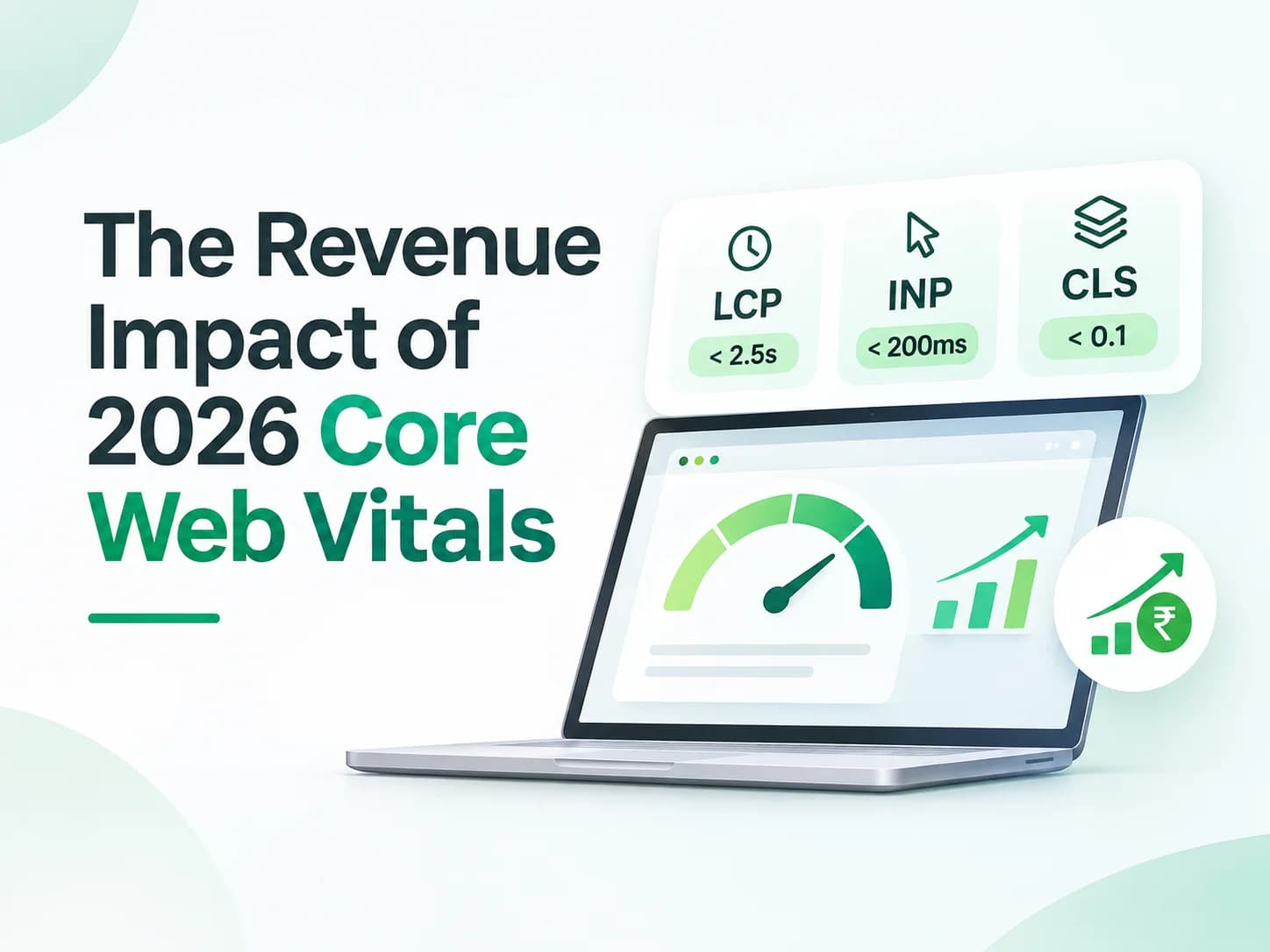
- LCP (Largest Contentful Paint): Measures loading performance. How fast does the largest element (usually a hero image or text block) render on the screen? Target: Under 2.5 seconds.
- INP (Interaction to Next Paint): Measures responsiveness. When a user clicks a button or opens a menu, how quickly does the site visually react? Target: Under 200 milliseconds.
- CLS (Cumulative Layout Shift): Measures visual stability. Does the content jump around as images load late, causing the user to accidentally click the wrong thing? Target: Under 0.1.
The Direct Link to Revenue
Why should a CEO or Marketing Director care about these highly technical metrics? Because user patience has evaporated.
The Cost of a Slow LCP
In e-commerce, a 1-second delay in mobile load times can impact conversion rates by up to 20%. If your LCP is hovering at 4 seconds, users are abandoning their carts before the product images have even finished loading. You are paying for ads to drive traffic to a site that is too slow to convert them.
The Frustration of Poor INP
Interaction to Next Paint (which officially replaced FID a few years ago) is arguably the most crucial metric for modern web apps. If a user clicks “Add to Cart” and the button doesn't immediately respond, they will click it again, assume the site is broken, or simply leave. A poor INP rating means your site feels sluggish and untrustworthy.
How to Fix It (Hint: It’s Not Just a Plugin)
A common mistake businesses make is trying to “fix” Core Web Vitals by installing a caching plugin and hoping for the best. While caching helps, it cannot fix fundamentally broken architecture.
To achieve perfect scores, you must address the root causes:
- Heavy JavaScript: Modern sites are choked by third-party tracking scripts, chat widgets, and bloated frameworks. We aggressively code-split and defer non-essential scripts.
- Unoptimized Media: Serving massive PNGs instead of modern WebP or AVIF formats destroys LCP.
- Server Architecture: Moving to edge computing and CDN-backed hosting ensures your site loads instantly, regardless of where the user is geographically located.
Performance as a Feature
At Nutz, we don't treat performance as an afterthought. When we build dynamic websites and eCommerce platforms, we engineer them from day one to pass Core Web Vitals with flying colors.
In a highly competitive digital landscape, speed is not just a ranking factor. Speed is a feature. It builds trust, reduces bounce rates, and directly impacts the bottom line.
Related work
View Clotricks web app case studyAbout the Author

Nutz
Design & Development Team
We share insights on design, development and building digital products from our studio in Erode, Tamil Nadu.
Work with usRelated SaaS product
Built by Nutz in Erode
Explore SaaS products we design and ship.